




Economical ailments have tightened as central banking companies continue to hike
interest charges. Amid the remarkably uncertain worldwide environment threats to
fiscal stability have elevated significantly.
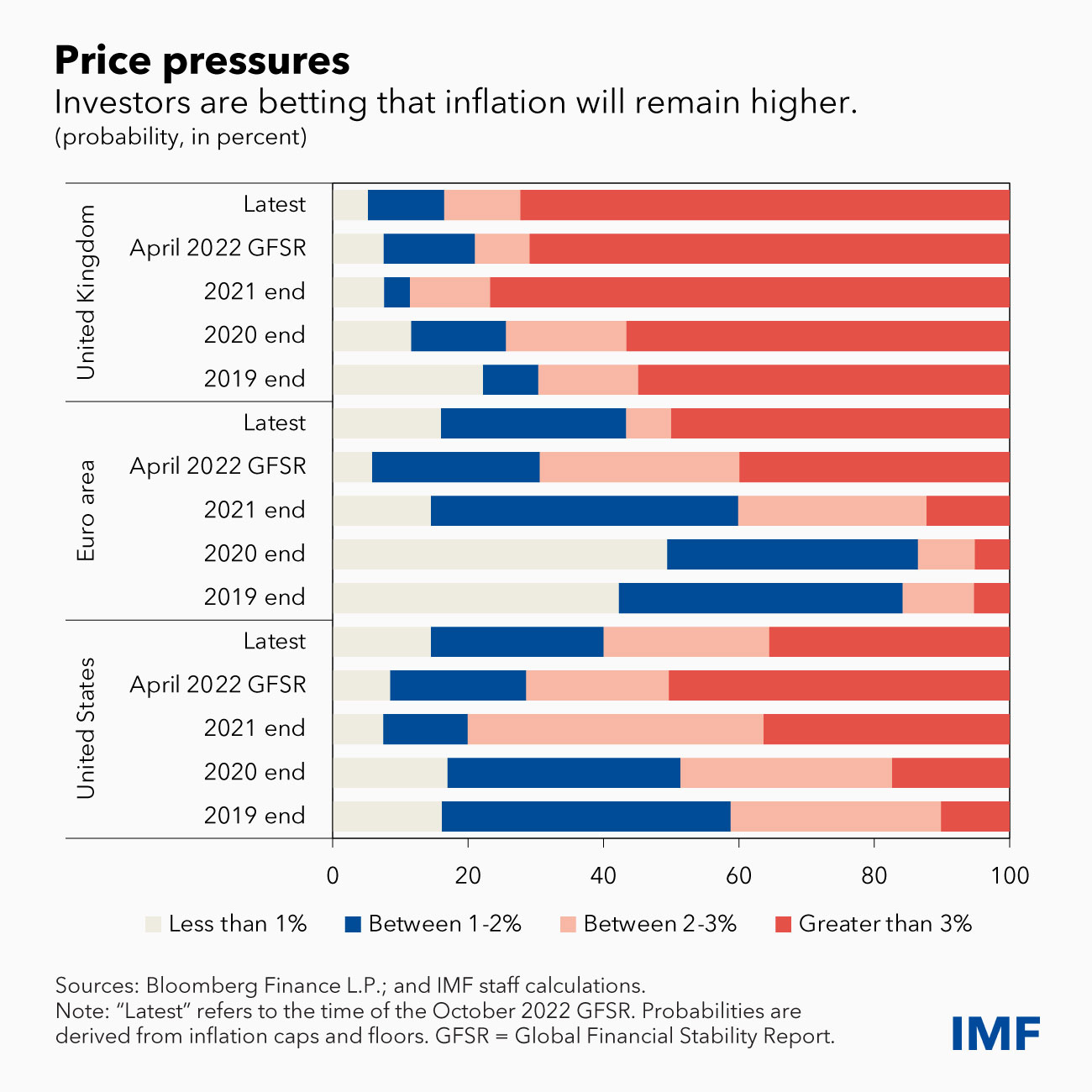
Key difficulties dealing with economical systems incorporate inflation at multi-10 years
highs, continuing deterioration of the financial outlooks in lots of areas,
and persistent geopolitical dangers, as we go over in our newest GlobalFinancial Balance Report.
To prevent inflationary pressures from turning out to be entrenched, central financial institutions
confronting stubbornly significant inflation have had to accelerate monetary
policy tightening. What is additional, those in advanced and emerging economies
alike also face magnified pitfalls and vulnerabilities across distinctive
sectors and regions.
Financial vulnerabilities are elevated for governments, a lot of with mounting
debt, as very well as nonbank money institutions such as insurers, pension
resources, hedge money and mutual cash. Rising charges have added to stresses
for entities with stretched harmony sheets.
At the very same time, the ease and velocity with which property can be traded at a
provided value has deteriorated throughout some critical asset lessons owing to risky
curiosity fees and asset costs. This inadequate sector liquidity, alongside one another with
pre-current vulnerabilities, could amplify any speedy, disorderly repricing
of hazard, have been it to occur in the coming months.
World wide marketplaces are demonstrating strains as traders have just lately grow to be more
danger-averse amid heightened financial and policy uncertainty. Economic
asset charges have fallen as financial plan has tightened, the financial
outlook has deteriorated, economic downturn fears have developed, borrowing in difficult
currency has turn out to be additional high-priced, and tension in some nonbank financial
establishments has accelerated. Bond yields are mounting broadly throughout credit rating
rankings, with borrowing charges for numerous international locations and providers previously
soaring to the greatest stages in a 10 years or far more.
Property fears
The faltering assets sector in lots of international locations raises worries about challenges
that could broaden and spill about into banking companies and the macroeconomy. Threats to
housing markets are escalating mainly because of mounting property finance loan premiums and tightening
lending specifications, with lots of more probable borrowers now being squeezed
out of marketplaces. Stretched housing valuations could adjust sharply in some
sector segments.
Rising marketplaces are confronting a multitude of dangers, which include higher
external borrowing charges, stubbornly substantial inflation and risky commodity
marketplaces. They also confront heightened uncertainty about the world financial system,
and coverage tightening in advanced economies.
Strains are significantly significant in frontier markets
—generally lesser developing economies—where worries are driven by a
mixture of tightening economical situations, deteriorating fundamentals,
and superior publicity to commodity rate volatility.
Buyers have so significantly continued to differentiate across rising
economies.
Although many frontier markets are at chance of sovereign default, several of the
greatest emerging markets are extra resilient to external vulnerabilities to
date. Having mentioned that,
soon after the stabilization of outflows in the initial 50 percent of the year,
foreign traders are once more pulling back.
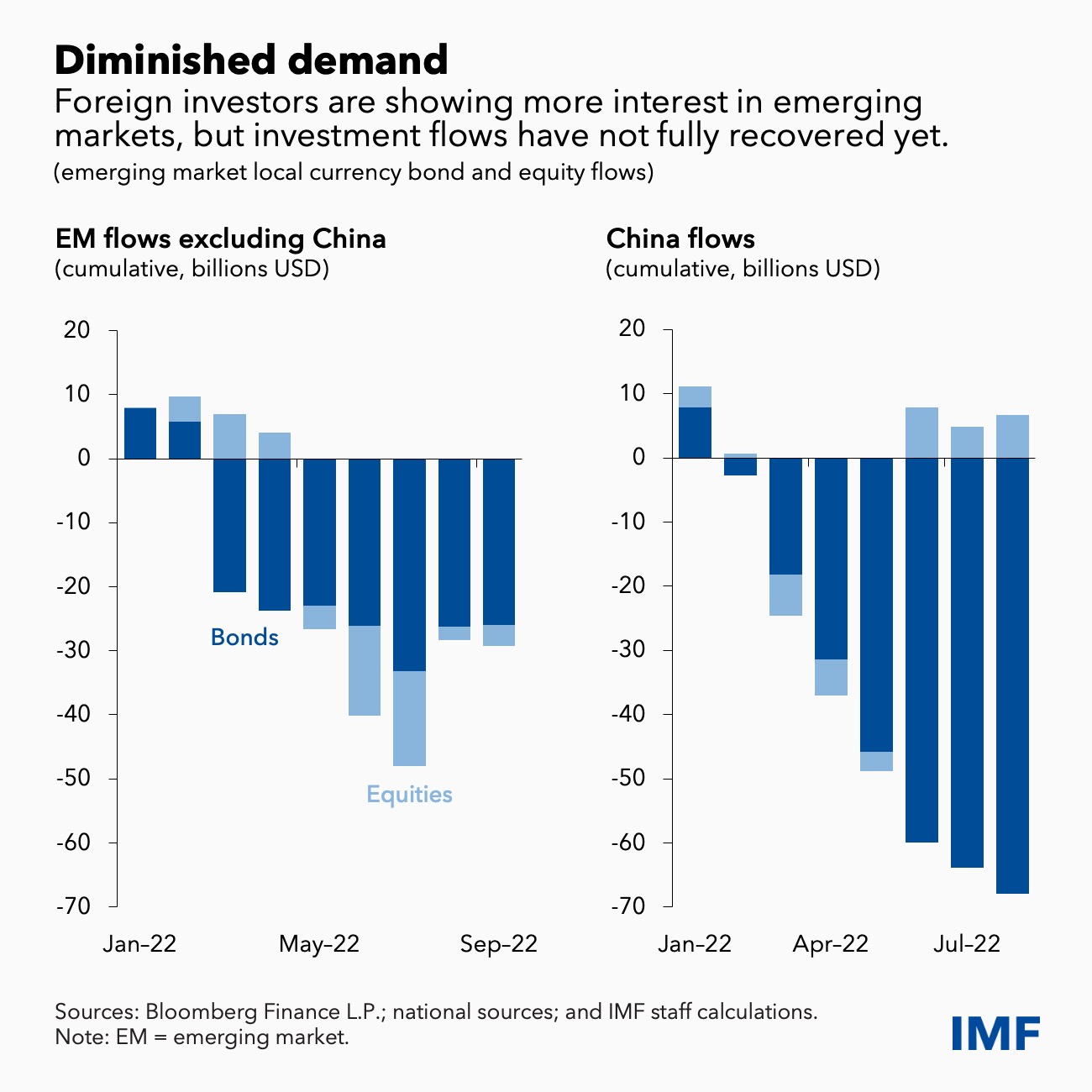
Emerging and frontier marketplace bond issuance in US bucks and other major
currencies has slowed to the weakest speed due to the fact 2015. Devoid of enhanced
entry to international funding, many frontier sector issuers will have to find
substitute resources and/or credit card debt reprofiling and restructurings.
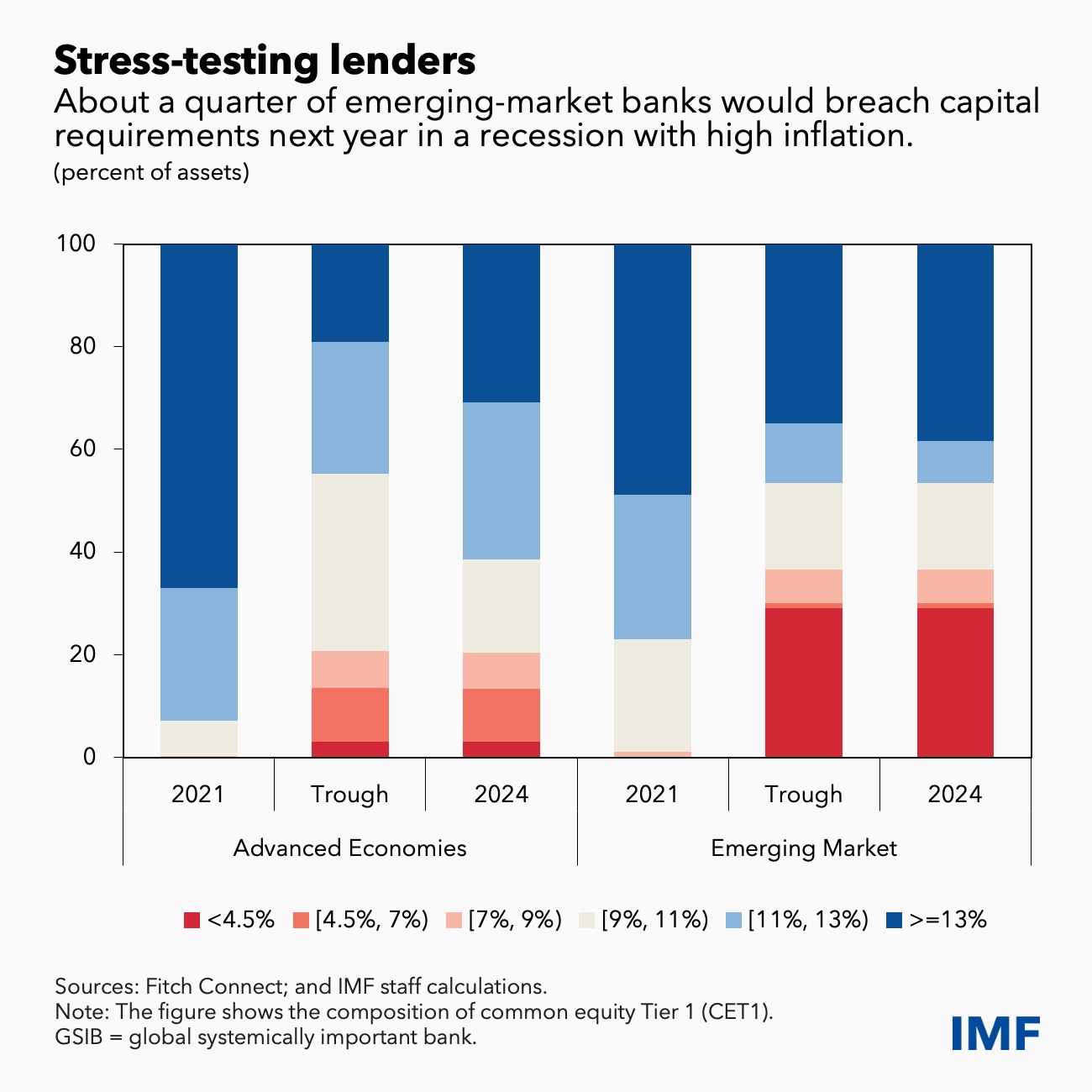
The global banking sector has been bolstered by higher amounts of money and
enough liquidity buffers. Nevertheless, the IMF’s
World Lender Worry Check
warns these buffers might not be sufficient for some banking companies. In the celebration a sharp
tightening of economical circumstances causes a international economic downturn subsequent 12 months amid
significant inflation, 29 % of emerging-market banks (by assets) would
breach funds demands. Most banking institutions in innovative economies would fare
a lot greater, the pressure examination suggests.
The demanding macroeconomic surroundings is also placing strain on the
global company sector. Credit spreads have widened considerably, and
higher charges are eroding corporate revenue. For smaller firms, bankruptcies
have now started out to raise because of larger borrowing fees and
diminished fiscal assistance.
Plan suggestions
Central banks should act resolutely to provide inflation back to target and
keep away from a de-anchoring of inflation anticipations, which would damage their
reliability. Apparent communication about plan selections, dedication to
selling price balance, and the need for even further tightening will be essential to
protect reliability and prevent marketplace volatility.
Exchange level adaptability aids nations regulate to the differential speed
of financial policy tightening across international locations. In cases exactly where exchange
level actions impede the central bank’s financial transmission system
and/or deliver broader financial steadiness pitfalls, international exchange
intervention can be deployed. These kinds of interventions should be part of an
built-in approach to addressing vulnerabilities as laid out in the IMF’s
Integrated Policy Framework
.
Rising and frontier marketplaces should minimize personal debt danger via early
engagement with collectors, multilateral cooperation, and international
assistance. For those people in distress, bilateral and personal sector lenders
really should coordinate on preemptive restructuring to steer clear of expensive defaults and
extended loss of current market obtain. Exactly where applicable, the
Team of 20 Typical Framework
ought to be used.
Policymakers deal with an unusually challenging economic balance surroundings.
However no globally systemic celebration has materialized so significantly, they must
contain further more buildup of vulnerabilities by changing selected
macroprudential tools to deal with any pockets of chance. In this hugely
unsure natural environment, hanging a equilibrium concerning that contains these
opportunity threats and keeping away from a disorderly tightening of fiscal
ailments will be critical.
—This blog site is dependent on Chapter 1 of the Oct 2022 Global Fiscal
Stability Report, “Financial Balance in the New High-Inflation
Setting.”
website link



More Stories
China’s Real Estate Challenge
How a trade war and U.S. tariffs could hit Canada’s housing market – National
Housing Development Expected To Pause If Tariff Threat Turns Into Trade War